Dermalogica
Five years on dermalogica.com, from a product page built to sell to the new Routine Finder, a skincare quiz that ends in a routine instead of a grid of products.
- $100KRoutine Finder revenue in one month
- 13%Routine Finder conversion rate, October 2026
Five years, one site
I’ve worked across dermalogica.com for five years. Two pieces show the range: the product page, where shoppers decide, and the Routine Finder, the newest feature.
A product page built to sell
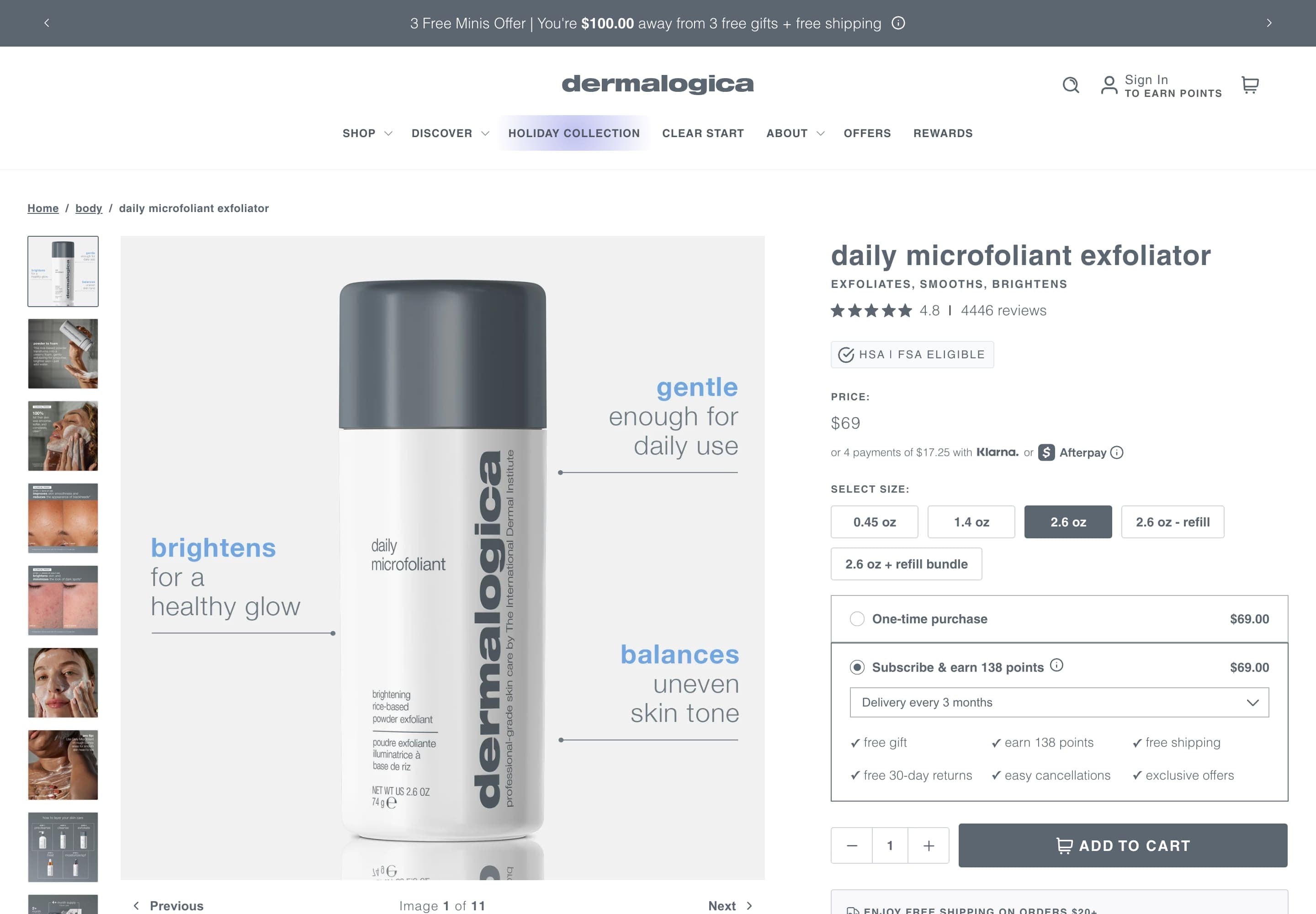
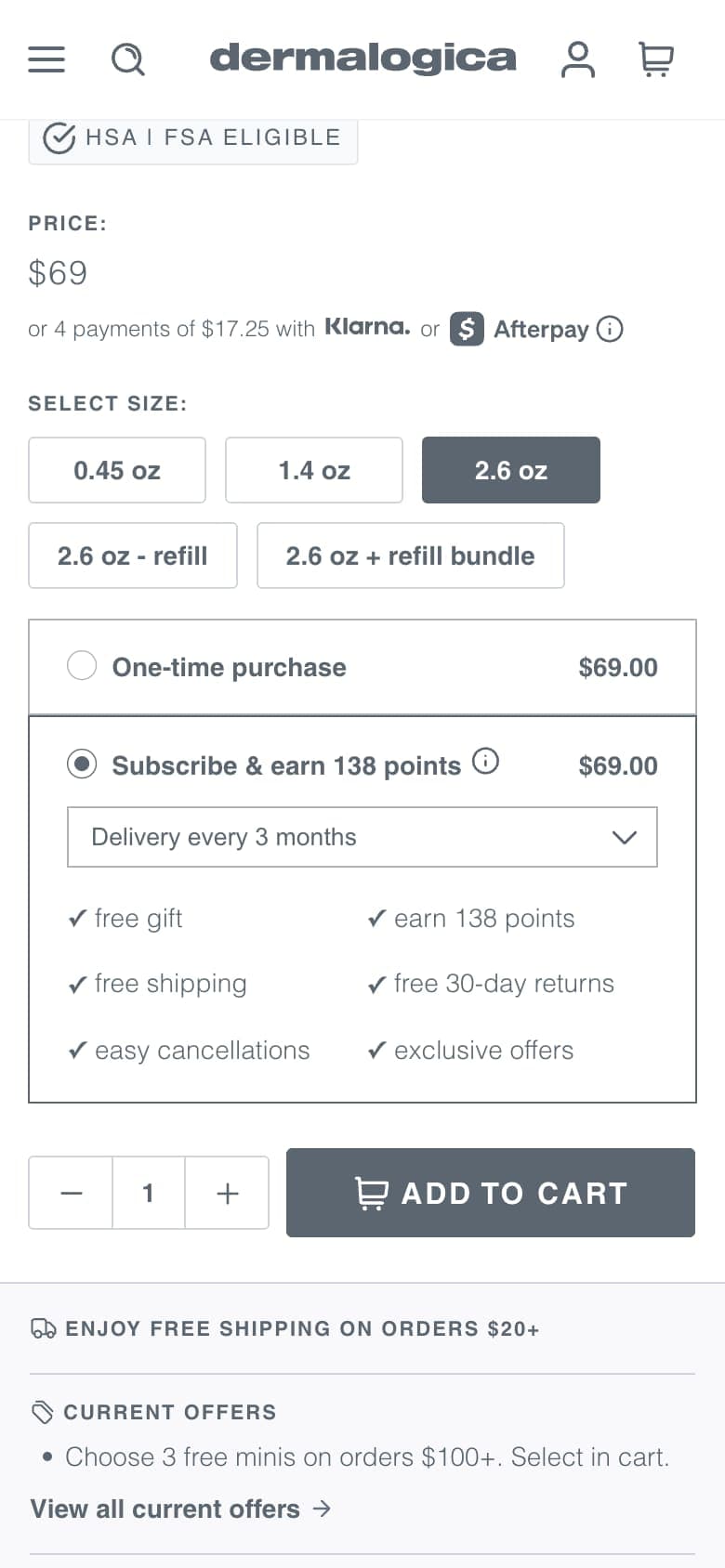
Daily Microfoliant’s page answers the buying questions in order: what it does, how it’s rated, which size, and how to buy. Sizes include refills. The subscription lists its perks, such as a free gift, free shipping and easy cancellation, right where you choose it.
Selling the routine
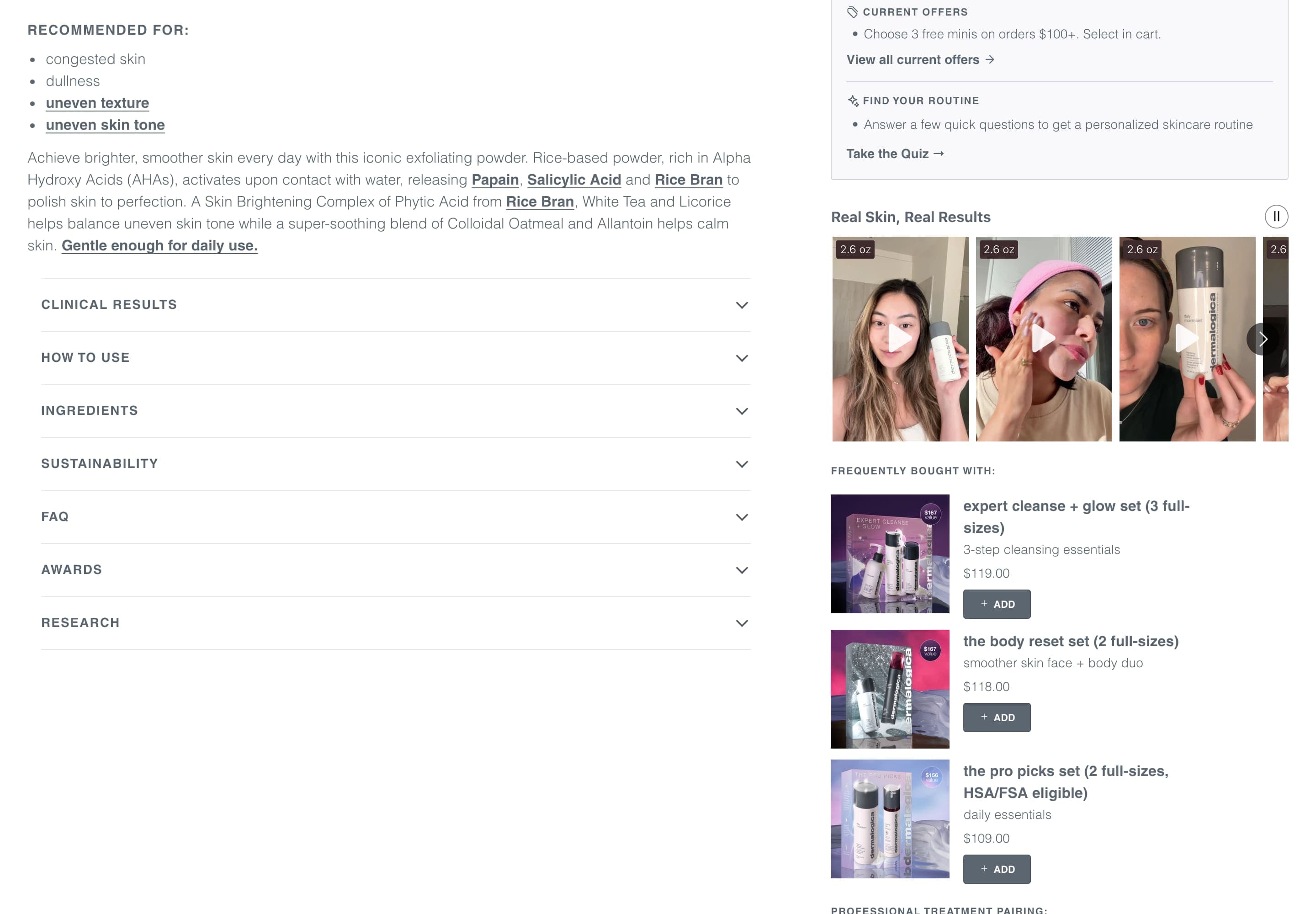
Below the buy box, the page sells a routine, not just a product: the skin concerns it suits, real customers using it on video, the sets it’s often bought with, a professional treatment to pair it with, and a link to the Routine Finder for anyone unsure where to start.
The Routine Finder
Most skincare quizzes ask good questions, then hand back a product list. Before sketching the Routine Finder, I audited how other brands ended their quizzes. Results were sorted by category, by bestseller rank or by a relevance score. None of it said what to use first, or why a product fit. Every results page was a dead end.
Questions that change the answer
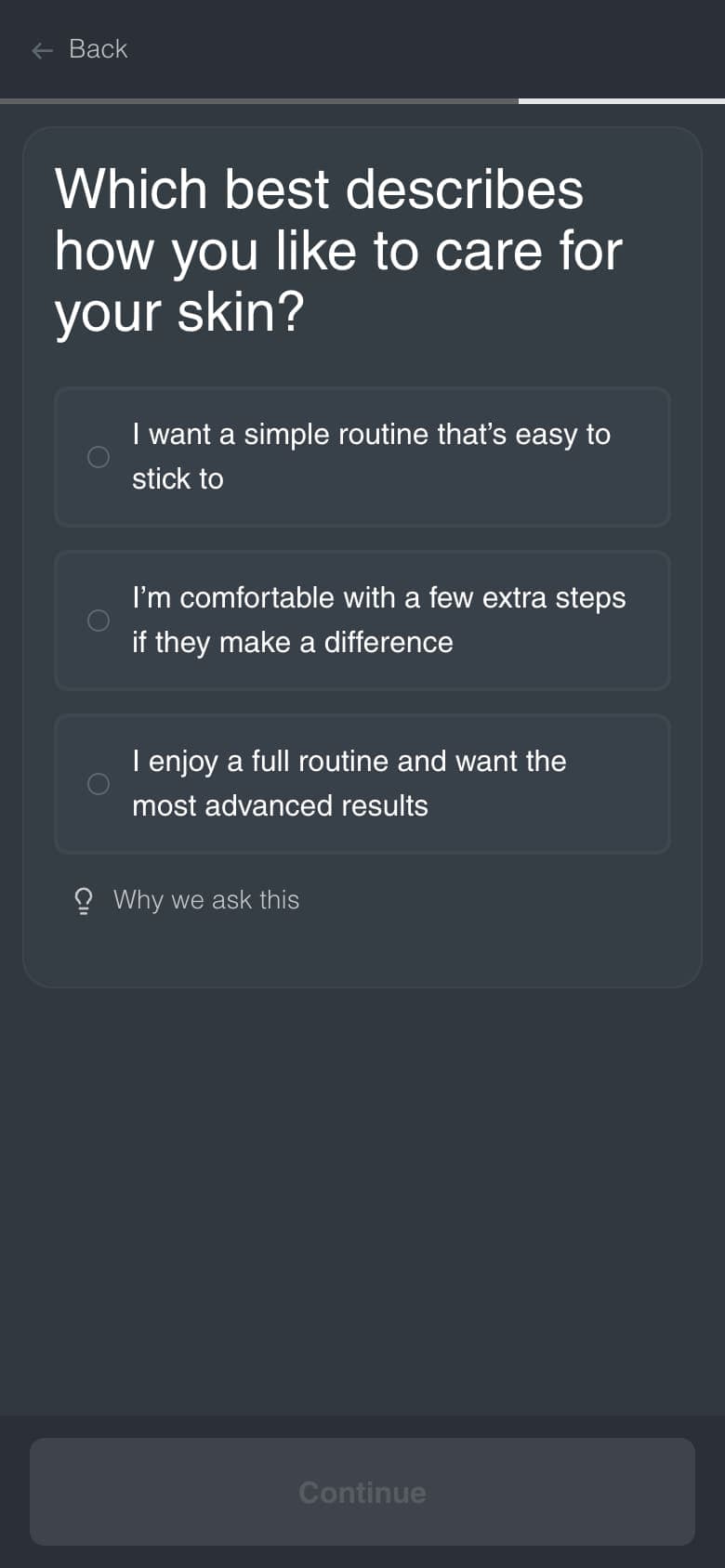
After a first name, there are five questions: age, when you do your routine, your top concern, how much routine you want, and how your skin reacts to new products. The routine question sets the depth: a simple routine, a few extra steps, or a full routine. Sensitivity isn’t a path of its own. It filters the products on every path.
A routine, in order
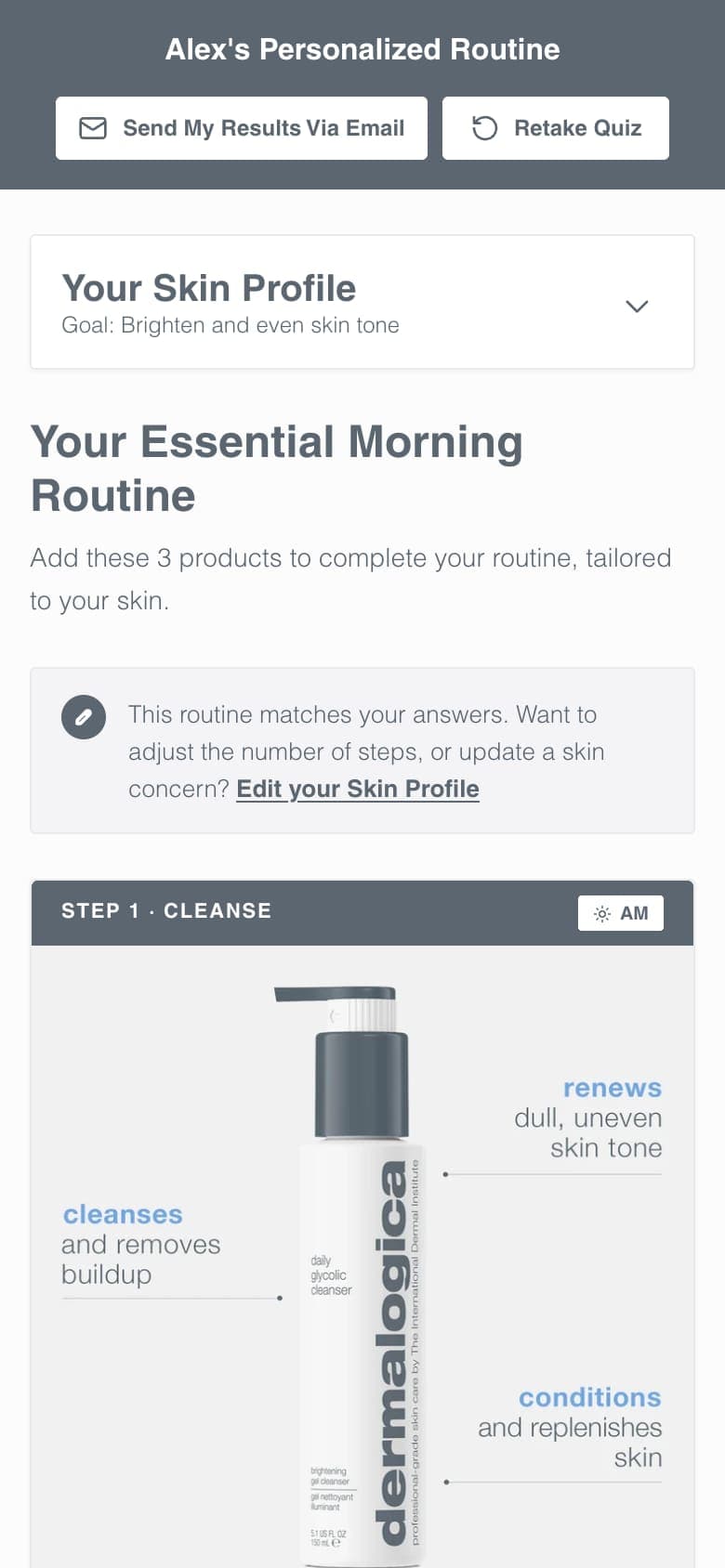
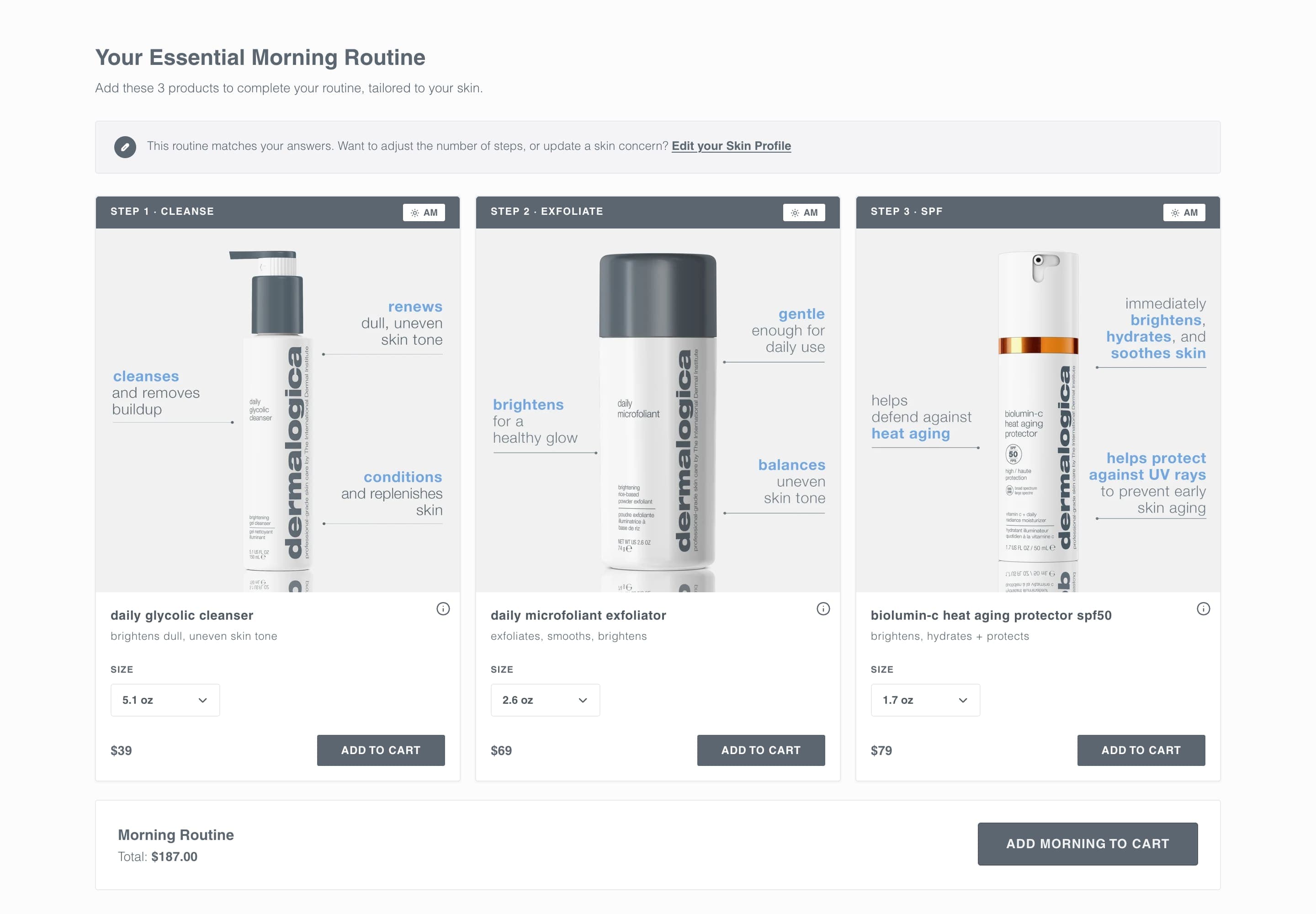
Results read like a routine, not a catalog. Steps are numbered in the order you use them. Morning and evening each get their own routine and one button to add the whole set to the bag. Kits, professional treatments and a chat with a skin therapist come after the routine, never before it.
How the finder is built
Each result is a Shopify collection, narrowed by product filters for routine depth, time of day and sensitivity. The recommendations live in Shopify’s own product data.
My role
I’ve worked on UX and UI design across dermalogica.com for five years. I designed the Routine Finder, from the competitive audit and the quiz flow to the results page, and helped the development team build it.
Want a product page or finder like this?
Product pages, quizzes and finders start with a short call and a written quote.